
 By lina
Colors play an important role in our daily lives. They influence emotions, affect decisions, and shape the way we see the world around us. Among the many colors used in art, design, technology, and branding, cyan has earned a special place because of its bright, refreshing, and modern appearance. The term Cyanová is often associated with cyan-inspired concepts, creative design ideas, color themes, and modern visual aesthetics.
Cyanová represents more than just a color. It symbolizes clarity, innovation, freshness, creativity, and digital progress. As industries continue to embrace modern design trends, cyan-based palettes have become increasingly popular in websites, applications, marketing campaigns, fashion, interior design, and technology products.
This article explores the meaning of Cyanová, its history, color characteristics, practical uses, psychological impact, design value, and modern importance in today’s world.
Cyanová is a term linked to the cyan color family. Cyan itself is a bright blue-green shade positioned between blue and green on the color spectrum. It is often associated with water, sky reflections, digital displays, and modern technology.
The word Cyanová can be viewed as a creative or stylized variation related to cyan-inspired aesthetics. In visual design, it often represents themes that focus on:
- Freshness
- Clean design
- Digital innovation
- Creativity
- Modern branding
- Future-oriented concepts
Because cyan is highly visible and appealing, it has become a favorite choice among designers and marketers seeking a contemporary look.
The word “cyan” originates from the Greek word kyanos, meaning dark blue. Over time, the color evolved into the bright blue-green shade recognized today.
Historically, cyan gained significance with the development of color printing. It became one of the four primary ink colors used in the CMYK printing system:
- Cyan
- Magenta
- Yellow
- Black
This printing method remains widely used around the world.
The rise of digital technology further increased cyan’s popularity because computer screens can display vibrant cyan tones effectively.
Cyan is unique because it sits directly between blue and green.
| Feature | Description |
|---|---|
| Color Family | Blue-Green |
| Symbolism | Freshness, Innovation, Calmness |
| RGB Value | 0, 255, 255 |
| CMYK Value | 100%, 0%, 0%, 0% |
| Visibility | High |
| Common Uses | Design, Printing, Branding |
Its bright appearance makes it suitable for both digital and print applications.
Cyanová represents a modern visual identity that combines creativity with professionalism.
Many businesses choose cyan-inspired branding because it helps communicate:
- Trust
- Innovation
- Intelligence
- Clean technology
- Transparency
The color appears energetic without being overwhelming, making it useful in a wide range of industries.
Color psychology studies how colors influence human thoughts and emotions.
Cyan is known for creating feelings of:
Like clear water and open skies, cyan often produces a peaceful sensation.
Many people associate cyan with clean thinking and mental focus.
Technology companies frequently use cyan because it appears modern and futuristic.
Cyan conveys cleanliness and renewal, making it popular in health and wellness branding.
The balance between blue and green creates a trustworthy appearance.
These psychological associations contribute to Cyanová’s popularity across many industries.
Graphic designers often use cyan-based color schemes because they are visually appealing and versatile.
- High visibility
- Excellent contrast
- Modern appearance
- Easy readability
- Suitable for digital platforms
Designers frequently combine cyan with:
- White
- Black
- Navy blue
- Gray
- Purple
- Silver
These combinations create professional and attractive layouts.
Web design trends have increasingly favored cyan-inspired palettes.
Cyan creates a clean and user-friendly experience. It works especially well for:
- Technology websites
- Software companies
- Startup businesses
- Educational platforms
- Healthcare websites
The color helps important buttons and call-to-action elements stand out without looking aggressive.
- Navigation menus
- Buttons
- Icons
- Headers
- Background gradients
- User interface highlights
Many modern websites use cyan accents to achieve a sleek and contemporary appearance.
A brand’s colors significantly affect how customers perceive a company.
Brands using cyan-inspired themes often wish to communicate:
| Branding Goal | How Cyan Helps |
|---|---|
| Innovation | Suggests modern technology |
| Trust | Creates reliability |
| Freshness | Appears clean and energetic |
| Professionalism | Looks organized |
| Creativity | Encourages originality |
Because of these benefits, cyan remains a popular branding choice worldwide.
Technology companies frequently embrace cyan tones.
The color aligns naturally with themes such as:
- Artificial Intelligence
- Software development
- Cloud computing
- Cybersecurity
- Data analytics
- Mobile applications
Many software interfaces use cyan highlights because they are easy to see and aesthetically pleasing.
Cyan also appears frequently in futuristic digital concepts and science-fiction-inspired visuals.
Interior designers often use cyan shades to create inviting and refreshing environments.
- Wall paint
- Decorative pillows
- Furniture accents
- Artwork
- Curtains
- Lighting effects
Cyan can brighten a room while maintaining a calm atmosphere.
- Bedrooms
- Offices
- Living rooms
- Study areas
- Creative workspaces
Its balance between energy and tranquility makes it highly versatile.
Fashion trends regularly include cyan-inspired shades.
The color is attractive because it appears:
- Fresh
- Stylish
- Modern
- Youthful
- Sophisticated
Designers use cyan in:
- Dresses
- Jackets
- Sportswear
- Accessories
- Shoes
- Handbags
Cyan works well during spring and summer collections but can also serve as an eye-catching accent throughout the year.
Digital artists appreciate cyan for its visual impact.
- Strong color contrast
- Vibrant appearance
- Futuristic feel
- Excellent screen visibility
Artists often use cyan when creating:
- Sci-fi artwork
- Fantasy illustrations
- Concept art
- Gaming environments
- Neon-inspired designs
Its luminous quality makes digital compositions appear dynamic and engaging.
Marketing professionals understand that colors affect consumer behavior.
Cyan can help advertisements appear:
- Trustworthy
- Professional
- Modern
- Memorable
Companies often use cyan in:
- Social media graphics
- Promotional banners
- Product packaging
- Email campaigns
- Online advertisements
Because it attracts attention without being overly aggressive, cyan serves as an effective marketing tool.
User Interface (UI) design relies heavily on color selection.
Cyan is popular because it helps users quickly identify interactive elements.
- Buttons
- Icons
- Progress indicators
- Notifications
- Links
- Hover effects
A well-designed cyan interface can improve usability and create a pleasant user experience.
Many people associate cyan with progress and future technology.
This association exists because cyan frequently appears in:
- Technology branding
- Scientific visuals
- Futuristic movies
- Digital products
- Advanced software interfaces
As a result, Cyanová often symbolizes innovation and forward thinking.
Organizations seeking a modern image frequently incorporate cyan into their visual identity.
Combining cyan with complementary colors can create powerful visual effects.
Produces a clean and minimalist appearance.
Creates strong contrast and a futuristic look.
Adds professionalism and depth.
Generates a creative and artistic style.
Offers balance and sophistication.
These combinations are widely used in branding and design projects.
Educational websites increasingly use cyan-inspired themes.
The color helps create:
- Focused environments
- Clean layouts
- Friendly interfaces
- Improved readability
Many online learning platforms choose cyan because it appears approachable while maintaining professionalism.
Cyan naturally connects with water and nature.
Because of this association, environmental organizations often use cyan-inspired colors in campaigns promoting:
- Clean water
- Ocean conservation
- Sustainability
- Renewable energy
- Environmental awareness
The color reinforces messages related to purity and ecological responsibility.
Although cyan offers many advantages, designers must use it carefully.
Too much cyan can make designs appear overwhelming.
Certain cyan shades may become difficult to read against light backgrounds.
Traditional or luxury brands may find cyan less suitable than darker tones.
Successful design requires balancing cyan with complementary colors and proper spacing.
Design trends continue to evolve, but cyan remains highly relevant.
Future applications may include:
- Artificial intelligence interfaces
- Virtual reality experiences
- Augmented reality systems
- Smart device dashboards
- Interactive digital environments
As technology advances, cyan’s association with innovation is likely to grow even stronger.
Design experts predict continued popularity for cyan-based gradients, neon effects, and futuristic visual systems.
Businesses can leverage Cyanová-inspired design strategies in several ways.
Use cyan accents to highlight important actions.
Create memorable logos and visual systems.
Develop packaging that stands out on shelves.
Design engaging posts with cyan color themes.
Improve user experience through clean interfaces.
When applied strategically, cyan can strengthen brand recognition and customer engagement.
Different cultures may interpret colors differently, but cyan generally maintains positive associations worldwide.
Common perceptions include:
- Intelligence
- Calmness
- Modernity
- Openness
- Creativity
These universal qualities contribute to the broad appeal of Cyanová-inspired design.
The digital era has elevated cyan from a simple color to a symbol of technological advancement.
Today, cyan appears across:
- Smartphones
- Websites
- Applications
- Digital advertising
- Online education
- Gaming platforms
Its vibrant yet professional appearance makes it especially effective on modern screens.
As digital experiences continue to expand, Cyanová remains closely connected with innovation and user-centered design.
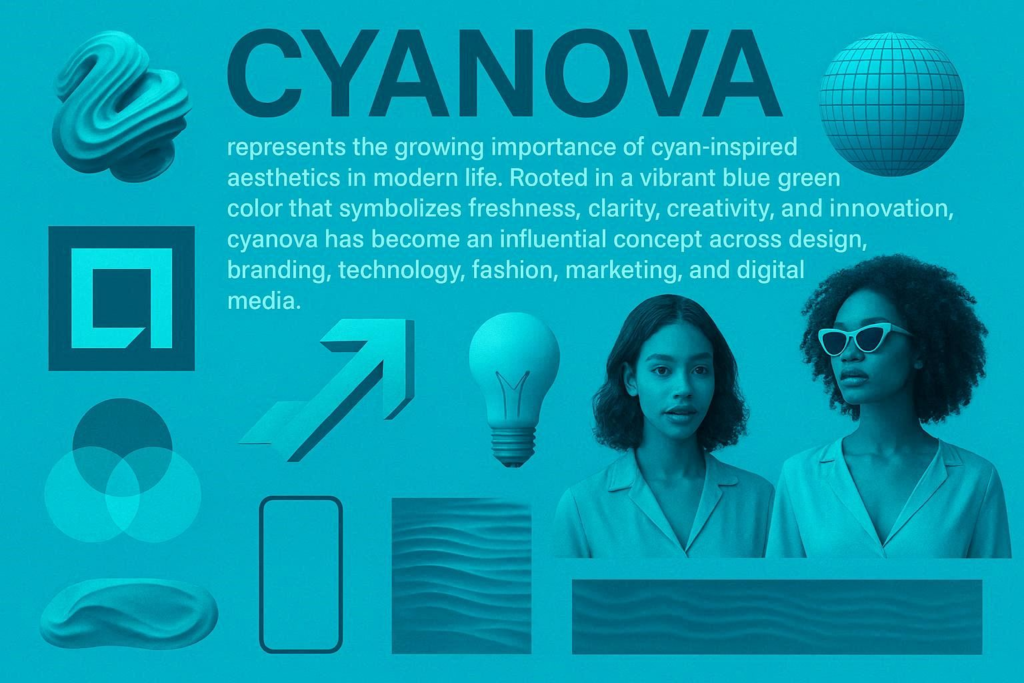
Cyanová represents the growing importance of cyan-inspired aesthetics in modern life. Rooted in a vibrant blue-green color that symbolizes freshness, clarity, creativity, and innovation, Cyanová has become an influential concept across design, branding, technology, fashion, marketing, and digital media.
Its ability to balance professionalism with energy makes it one of the most versatile colors available today. Whether used in websites, business branding, interior design, educational platforms, or futuristic digital products, cyan consistently communicates trust, modernity, and progress.
As technology and design continue to evolve, the significance of Cyanová is expected to increase even further. Its connection to innovation, clean visual communication, and modern aesthetics ensures that it will remain a valuable and influential design element for years to come.