
 By lina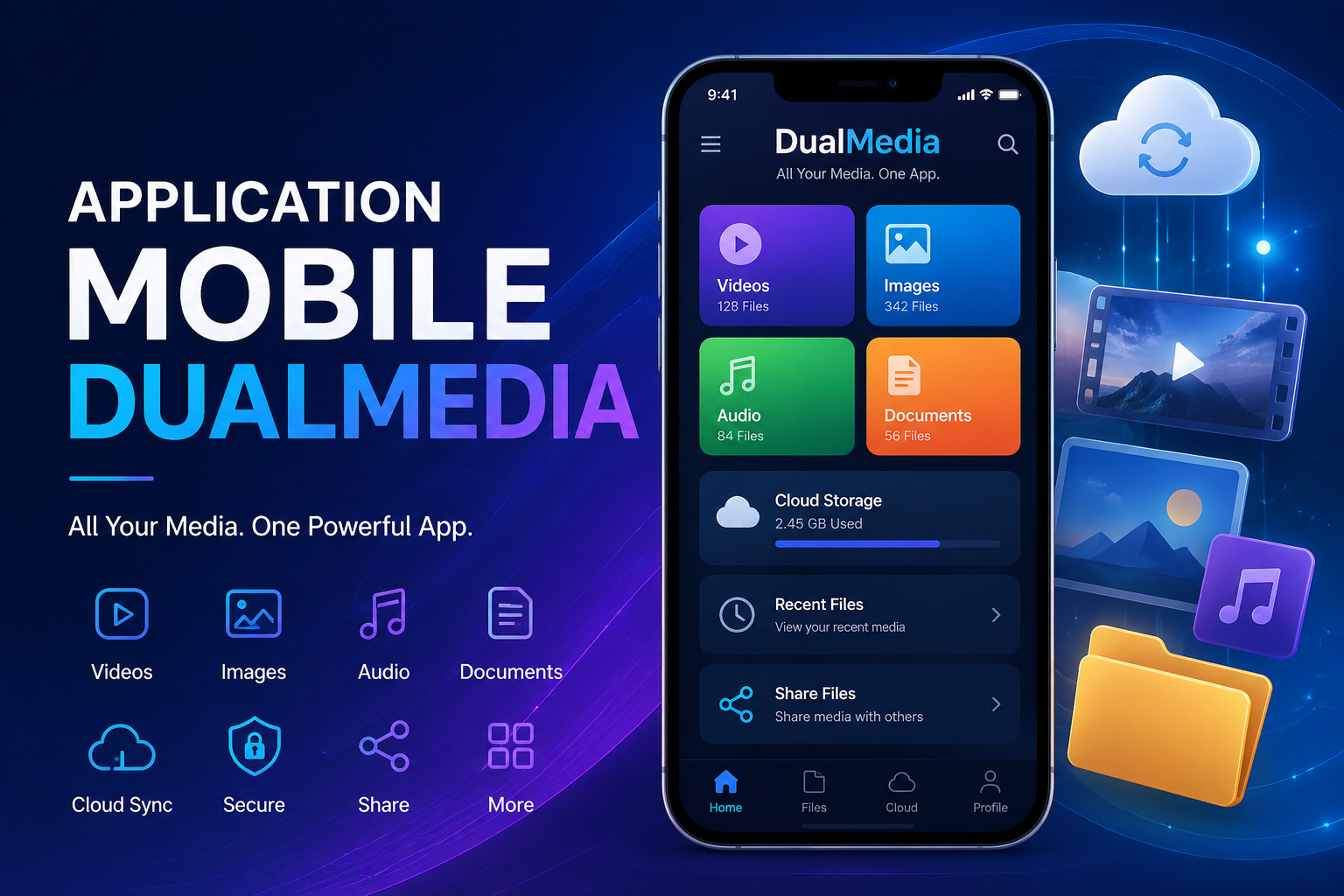
Application Mobile DualMedia is becoming a topic of interest among mobile users who want a platform that combines multiple forms of digital media into a single application. In today’s fast-moving digital world, people prefer apps that can manage videos, images, audio files, communication tools, and content-sharing features without requiring several different applications. Application Mobile DualMedia aims to provide a more convenient experience by bringing different media functions together in one place. Whether users want to view multimedia content, organize files, share information, or improve digital productivity, understanding how Application Mobile DualMedia works can help them make better use of modern mobile technology.
| Feature | Description | Benefit |
|---|---|---|
| Multimedia Support | Handles videos, images, and audio | Easy content management |
| Mobile-Friendly Interface | Designed for smartphones and tablets | Better user experience |
| Fast Performance | Optimized loading and processing | Saves time |
| Content Sharing | Allows quick file distribution | Improved collaboration |
| Cloud Integration | Connects with online storage | Access files anywhere |
| Security Features | Protects user data | Enhanced privacy |
| Cross-Platform Compatibility | Works across multiple devices | Greater flexibility |
| Media Organization | Categorizes files efficiently | Easier navigation |
Application Mobile DualMedia is a multimedia-focused mobile application concept designed to combine different forms of digital content management within a single platform. Instead of using separate apps for images, videos, audio files, and document sharing, users can access multiple functions from one interface. This integrated approach improves efficiency and helps users stay organized.
The term “DualMedia” generally suggests support for more than one type of media format. Modern mobile users frequently switch between watching videos, listening to audio, viewing photographs, and sharing content online. An application built around DualMedia principles attempts to simplify these activities by offering a unified environment.
As smartphones continue to evolve, users expect apps to deliver comprehensive solutions. This demand has contributed to the popularity of multifunctional applications that can handle various digital tasks simultaneously.
Mobile technology has transformed the way people communicate, learn, work, and entertain themselves. Multimedia applications have become essential because they support a wide range of activities.
Users consume content in different formats throughout the day. They may watch educational videos, listen to podcasts, view social media images, or share presentations. Managing these activities through separate applications can be inconvenient.
Application Mobile DualMedia addresses this challenge by providing centralized access to multimedia content. This approach reduces app switching, improves productivity, and creates a more seamless digital experience.
Businesses, educators, content creators, and everyday users all benefit from multimedia solutions that simplify content management and sharing.
One of the main reasons users explore Application Mobile DualMedia is its broad feature set. These features are designed to enhance convenience and functionality.
The application typically supports multiple file formats, including:
- Images
- Videos
- Audio recordings
- Documents
- Presentations
This flexibility allows users to manage different types of content without needing additional software.
Modern applications focus heavily on user experience. Application Mobile DualMedia generally includes an intuitive interface that helps users navigate features quickly and efficiently.
Simple menus, organized categories, and responsive controls contribute to a smoother experience.
Cloud integration has become increasingly important. Users often need access to files across multiple devices.
Cloud synchronization allows content to remain available whether users switch between smartphones, tablets, or computers.
Fast sharing options make it easier to send files to colleagues, friends, or family members.
Sharing methods may include:
- Email integration
- Social media platforms
- Messaging services
- Direct device transfers
Protecting personal data remains a top priority.
Many multimedia applications include:
- Password protection
- Data encryption
- Secure login systems
- Privacy controls
These features help safeguard sensitive information.
Users can gain several advantages from adopting a multimedia-focused application.
Keeping all media content in one location reduces clutter and confusion.
Instead of searching through multiple apps, users can manage files through a centralized system.
Professionals often handle various forms of content daily.
Application Mobile DualMedia can streamline workflows by reducing the time spent switching between applications.
Having content accessible from multiple devices increases convenience.
Cloud-enabled features ensure important files remain available when needed.
Teams frequently share multimedia files during projects.
Integrated sharing tools help improve communication and collaboration.
Installing fewer apps can simplify device management.
A multifunctional application can replace several single-purpose apps.
Content creators constantly work with multiple media formats.
For example, a creator may:
- Record audio
- Edit images
- Upload videos
- Share content across platforms
Managing all these activities separately can be time-consuming.
Application Mobile DualMedia offers a centralized environment where creators can organize and distribute content more effectively.
This efficiency allows creators to focus more on producing quality content rather than managing technical processes.
Educational institutions increasingly rely on digital learning resources.
Students and teachers use:
- Video lectures
- Audio recordings
- Interactive presentations
- Educational images
Application Mobile DualMedia can help organize these resources in one location.
Benefits include:
- Easier access to learning materials
- Improved collaboration between students and teachers
- Better content management
- Simplified resource sharing
Digital education continues expanding, making multimedia applications valuable learning tools.
Businesses use multimedia content for communication, marketing, training, and collaboration.
Application Mobile DualMedia supports business operations by providing:
Companies can distribute:
- Training videos
- Audio instructions
- Presentation materials
- Educational documents
Marketing teams often manage:
- Promotional videos
- Product images
- Advertising materials
Centralized management simplifies campaign organization.
Sharing updates through multimedia formats can improve employee engagement and information retention.
Whenever users store digital content, security becomes important.
Application Mobile DualMedia typically includes multiple protection mechanisms.
Encryption helps prevent unauthorized access to sensitive information.
Secure login methods verify user identities.
Users can determine who has access to shared content.
Backup systems reduce the risk of losing valuable data.
Following good security practices helps users protect their information while enjoying multimedia features.
Cloud technology plays a significant role in modern mobile applications.
Benefits include:
Users can access files from various devices.
Content updates automatically across connected platforms.
Cloud storage reduces reliance on local device memory.
Cloud backups help recover lost information after device failures.
Application Mobile DualMedia often leverages cloud capabilities to improve accessibility and reliability.
The mobile application industry constantly evolves.
Several trends influence the development of multimedia applications:
AI improves content organization and recommendations.
Voice-based navigation enhances accessibility.
High-speed networks support larger media files.
Applications increasingly adapt to user preferences.
Application Mobile DualMedia may incorporate these trends to provide a more advanced experience.
Despite their advantages, multimedia applications also encounter challenges.
Media files often consume significant storage space.
Handling multiple file formats requires efficient optimization.
Protecting user data remains an ongoing challenge.
Supporting various devices and operating systems can be complex.
Developers continuously work to address these challenges through updates and improvements.
The future of multimedia applications appears promising.
Emerging technologies are expected to enhance capabilities further.
Potential developments include:
- Improved AI integration
- Advanced cloud services
- Enhanced security systems
- Better content recommendations
- Faster synchronization speeds
As user expectations continue growing, multifunctional applications will likely become even more sophisticated.
Application Mobile DualMedia represents a broader trend toward unified digital experiences where multiple functions are combined into a single platform.
Users can improve their experience by following several best practices.
Maintaining categories and folders helps improve efficiency.
Strong passwords and authentication systems enhance protection.
Regular backups reduce the risk of data loss.
Updates often include new features and security improvements.
Managing storage helps maintain optimal performance.
Following these recommendations can help users get the most value from multimedia applications.
Modern users expect convenience, efficiency, and flexibility from mobile applications.
Application Mobile DualMedia addresses these expectations by integrating multiple media functions within a single platform.
This approach reduces complexity while improving accessibility and productivity.
Whether used for education, business, entertainment, or personal organization, multimedia applications continue shaping how people interact with digital content.
As technology advances, applications that combine multiple functions into unified experiences will likely become even more important.
Application Mobile DualMedia reflects the ongoing evolution of mobile technology toward smarter, more efficient, and more user-friendly digital solutions.
Application Mobile DualMedia represents a modern approach to multimedia management by bringing various digital content functions together within a single application. Its ability to handle images, videos, audio files, documents, and sharing features makes it useful for individuals, businesses, educators, and content creators alike.
The growing demand for efficiency, accessibility, and convenience continues driving interest in multifunctional applications. By offering centralized management, cloud integration, security features, and improved collaboration tools, Application Mobile DualMedia helps users navigate the increasingly complex digital world.
As technology evolves and user expectations rise, multimedia applications like Application Mobile DualMedia are expected to play an even greater role in enhancing productivity and digital experiences.
Application Mobile DualMedia is a multimedia-focused mobile application concept that combines multiple content management functions such as videos, images, audio, and file sharing into a single platform.
Its main benefits include improved organization, better productivity, centralized media management, cloud synchronization, and enhanced collaboration.
Yes. It is designed to support various file formats including images, videos, audio files, documents, and presentations.
Most multimedia applications include security measures such as encryption, authentication systems, password protection, and privacy controls.
Cloud integration allows users to access files from multiple devices, synchronize content automatically, and maintain secure backups.
Students, educators, businesses, content creators, professionals, and general mobile users can all benefit from its features.
Yes. By reducing the need to switch between multiple apps, it helps users complete tasks more efficiently.
Future developments may include advanced AI features, stronger security, improved cloud services, faster synchronization, and enhanced personalization options.