
 By lina
Productivity is not just about working harder. It is about working smarter, managing your energy, and starting your day with purpose. Many successful people share one common trait: they follow consistent morning habits that help them stay focused, organized, and productive throughout the day.
The way you spend your morning can influence your mood, energy levels, decision-making abilities, and overall performance. When you begin your day with positive and intentional habits, you create momentum that carries into your work, studies, and personal life.
In today’s fast-paced world, distractions are everywhere. Social media notifications, emails, and endless tasks can quickly overwhelm you. However, a well-designed morning routine can help you stay in control and achieve more without feeling stressed.
The good news is that you do not need a complicated routine or expensive tools. Small daily habits can make a significant difference over time. Whether you are a student, entrepreneur, employee, or freelancer, adopting effective morning habits can improve your productivity and help you accomplish your goals.
| Morning Habit | Main Benefit |
|---|---|
| Wake Up Early | More time and less stress |
| Drink Water | Better hydration and energy |
| Exercise | Improved focus and mood |
| Meditation | Reduced stress and mental clarity |
| Healthy Breakfast | Sustained energy levels |
| Daily Planning | Better task management |
| Reading | Knowledge and inspiration |
| Limiting Phone Use | Fewer distractions |
| Gratitude Practice | Positive mindset |
| Prioritizing Tasks | Increased efficiency |
Morning habits matter because they set the tone for the rest of the day. Your brain is often at its freshest during the morning hours. This makes it the perfect time to focus on activities that improve mental clarity, physical health, and productivity.
When mornings are rushed and chaotic, people often feel stressed before their workday even begins. On the other hand, a calm and structured morning helps create a sense of control. This leads to better concentration, improved decision-making, and greater efficiency.
A productive morning routine also reduces decision fatigue. Instead of wondering what to do first, you follow a predetermined plan. This saves mental energy and allows you to focus on important tasks.
One of the most effective morning habits for better productivity is waking up early. Waking up early provides uninterrupted time before the demands of the day begin.
You do not necessarily need to wake up at 5 a.m. The key is consistency. Going to bed and waking up at the same time each day helps regulate your body’s internal clock.
Benefits of waking up early include:
- More time for personal development
- Reduced morning stress
- Better focus and concentration
- Improved planning opportunities
- Increased productivity
Start by waking up just 15 to 30 minutes earlier than usual. Gradually adjust your schedule until you find a routine that works best for you.
Many people press the snooze button multiple times before getting out of bed. While it may seem harmless, this habit can make you feel more tired.
When you repeatedly snooze your alarm, your sleep cycle becomes disrupted. Instead of feeling refreshed, you may experience grogginess and reduced alertness.
To avoid snoozing:
- Place your alarm across the room
- Use a motivating alarm tone
- Remind yourself of your daily goals
- Get out of bed immediately when the alarm rings
Making this small change can help you start your day with greater energy and discipline.
After several hours of sleep, your body naturally becomes dehydrated. Drinking water first thing in the morning helps rehydrate your body and support important functions.
Hydration can improve:
- Brain performance
- Energy levels
- Digestion
- Metabolism
- Concentration
Keep a glass or bottle of water near your bed so it becomes easy to establish this habit. Many people notice increased alertness within minutes of drinking water in the morning.
Making your bed may seem like a minor task, but it can have a surprisingly positive impact on productivity.
Completing a simple task immediately after waking up creates a sense of accomplishment. It also encourages organization and discipline throughout the day.
Benefits include:
- Improved self-discipline
- Cleaner environment
- Better mood
- Stronger productivity mindset
This habit takes less than two minutes but can create a positive psychological effect.
Deep breathing exercises help calm the mind and prepare you for the day ahead.
When you breathe deeply, your body receives more oxygen, which supports brain function and reduces stress.
A simple breathing exercise:
- Inhale slowly through your nose for four seconds.
- Hold your breath for four seconds.
- Exhale slowly for six seconds.
- Repeat five to ten times.
This practice can improve focus and create a sense of calm before starting your daily responsibilities.
Physical activity is one of the most powerful productivity habits. Exercise increases blood flow to the brain and releases chemicals that improve mood and mental performance.
You do not need an intense workout. Even a short session can provide significant benefits.
Popular morning exercise options include:
- Walking
- Jogging
- Cycling
- Stretching
- Yoga
- Bodyweight exercises
Regular exercise can improve:
- Energy levels
- Memory
- Focus
- Stress management
- Overall health
Many productive individuals consider exercise a non-negotiable part of their morning routine.
Stretching is particularly useful for people who spend long hours sitting at desks.
Morning stretching helps:
- Improve flexibility
- Reduce muscle stiffness
- Enhance circulation
- Prevent discomfort during the day
Spend five to ten minutes stretching your neck, shoulders, back, and legs. This simple habit can help you feel more energized and comfortable.
Meditation has become increasingly popular among high achievers and productivity experts.
A few minutes of meditation can help:
- Reduce anxiety
- Increase concentration
- Improve emotional control
- Enhance mental clarity
You can start with just five minutes each morning. Sit comfortably, close your eyes, and focus on your breathing.
As your mind wanders, gently bring your attention back to your breath.
With consistent practice, meditation can significantly improve your ability to stay focused throughout the day.
Journaling is an excellent way to organize your thoughts and reduce mental clutter.
Morning journaling can include:
- Personal reflections
- Daily goals
- Gratitude lists
- Creative ideas
- Problem-solving thoughts
Writing things down helps clear your mind and allows you to approach the day with greater focus.
Many successful entrepreneurs and leaders use journaling as part of their daily routine.
Gratitude helps shift your attention away from problems and toward positive aspects of life.
Each morning, write down three things you are grateful for.
Examples include:
- Good health
- Family support
- Career opportunities
- Personal achievements
- Simple daily comforts
Practicing gratitude can improve mood, increase motivation, and reduce stress.
A positive mindset often leads to higher productivity and better decision-making.
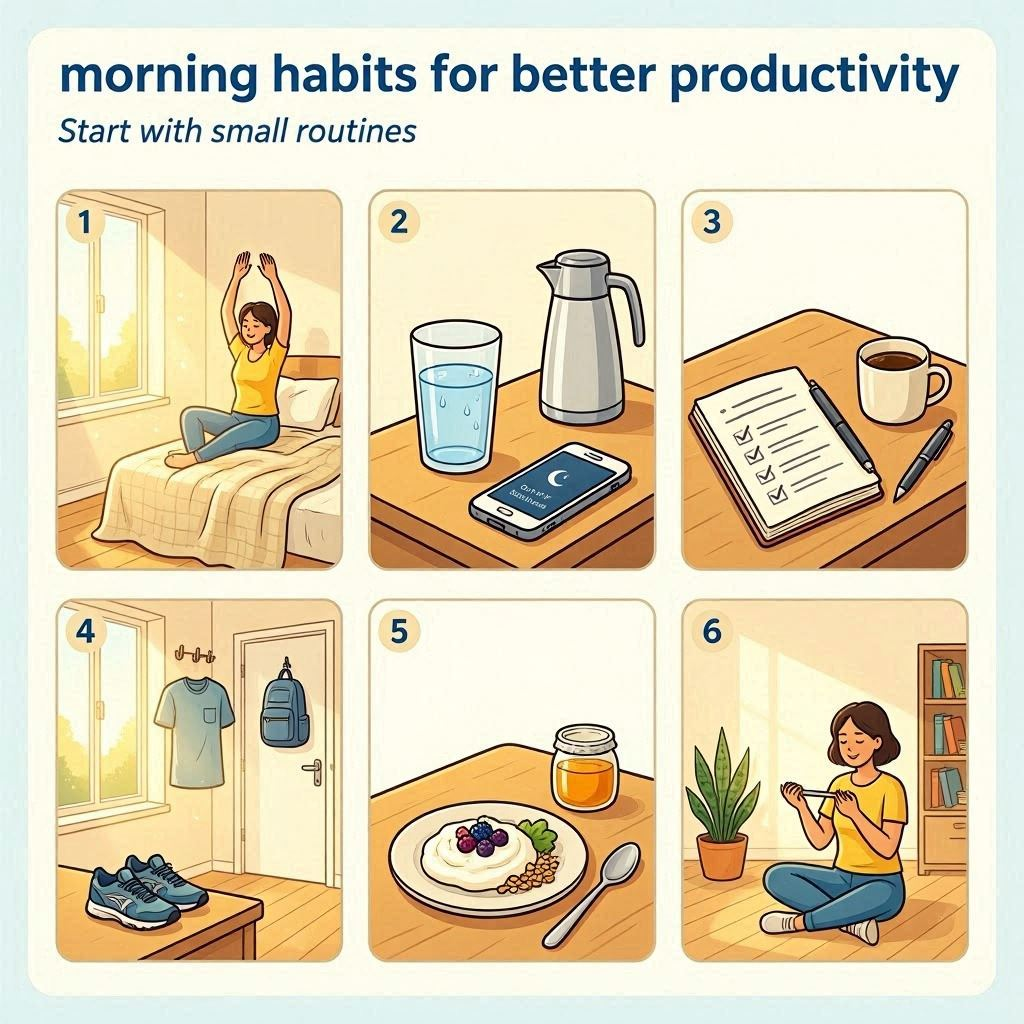
Your brain needs fuel to function effectively. A nutritious breakfast can provide the energy needed for productive work.
Healthy breakfast options include:
- Oatmeal
- Eggs
- Fruits
- Yogurt
- Whole-grain bread
- Smoothies
Try to avoid excessive sugar and highly processed foods, as they can cause energy crashes later in the day.
A balanced breakfast helps maintain steady energy and concentration.
One of the biggest productivity killers is checking social media immediately after waking up.
When you start your day scrolling through notifications, you allow external distractions to control your attention.
Instead:
- Delay social media use for at least 30 minutes
- Focus on your priorities first
- Avoid unnecessary digital distractions
Protecting your morning attention can significantly improve productivity.
Many people begin their day by reading emails. While this may seem productive, it often causes reactive behavior.
Instead of focusing on your own priorities, you begin responding to other people’s requests.
A better approach is to:
- Complete your morning routine first
- Plan your day
- Work on important tasks before checking emails
This helps you maintain control over your schedule.
Reading for just ten to fifteen minutes each morning can provide valuable knowledge and inspiration.
You can read:
- Personal development books
- Biographies
- Industry-related content
- Educational materials
Benefits include:
- Expanded knowledge
- Better critical thinking
- Increased creativity
- Continuous learning
Even a small daily reading habit can produce impressive long-term results.
Productive people regularly review their goals.
Morning goal review helps:
- Maintain motivation
- Increase focus
- Improve decision-making
- Track progress
Look at your short-term and long-term objectives each morning.
Ask yourself:
- What am I working toward?
- What progress can I make today?
- Which tasks matter most?
This habit keeps your actions aligned with your priorities.
A well-organized to-do list reduces confusion and improves efficiency.
When creating your list:
- Write down all important tasks
- Prioritize high-impact activities
- Be realistic about workload
- Focus on key objectives
Avoid creating excessively long lists that become overwhelming.
A clear plan increases productivity and reduces stress.
Many productivity experts recommend focusing on three major priorities each day.
Ask yourself:
“What are the three most important tasks I must complete today?”
By concentrating on a few high-value activities, you increase your chances of making meaningful progress.
This approach prevents distractions and improves time management.
Your mental energy is often strongest during the morning.
Use this peak energy period for important tasks that require concentration.
Examples include:
- Writing
- Strategic planning
- Problem solving
- Studying
- Creative work
Completing significant work early creates momentum and reduces procrastination.
Podcasts, audiobooks, and educational recordings can make your mornings more productive.
You can listen while:
- Exercising
- Walking
- Preparing breakfast
- Commuting
This habit allows you to learn new skills and gain useful insights without requiring additional time.
Continuous learning supports both personal and professional growth.
Exposure to natural sunlight helps regulate your body’s internal clock.
Morning sunlight can:
- Improve mood
- Increase alertness
- Support healthy sleep patterns
- Boost energy levels
Try spending a few minutes outdoors or near a window shortly after waking up.
This simple habit can have a powerful effect on overall well-being.

A cluttered environment can create mental distractions.
Spend a few minutes organizing your workspace or living area each morning.
Benefits include:
- Improved concentration
- Reduced stress
- Greater efficiency
- Better organization
A clean environment makes it easier to focus on important tasks.
Affirmations are positive statements that reinforce confidence and motivation.
Examples include:
- I am focused and productive.
- I can achieve my goals.
- I manage my time effectively.
- I approach challenges with confidence.
Repeating positive affirmations can help create a productive mindset.
Although this is technically an evening habit, it directly impacts your morning productivity.
Before going to bed:
- Choose your clothes
- Organize your workspace
- Create a task list
- Prepare breakfast ingredients
Preparation reduces morning decision-making and saves valuable time.
One common mistake is trying to adopt too many habits at once.
Instead:
- Start with one or two habits
- Practice consistently
- Add new habits gradually
Small improvements compound over time and produce significant results.
Consistency matters more than perfection.
Some habits can negatively affect your day.
Examples include:
- Oversleeping
- Excessive social media use
- Skipping breakfast
- Constant snoozing
- Checking emails immediately
- Lack of planning
- Staying indoors all morning
Recognizing these behaviors allows you to replace them with more productive alternatives.
There is no universal morning routine that works for everyone. The best routine is one that fits your lifestyle, goals, and responsibilities.
A sample productive morning routine might look like this:
- Wake up at 6:30 a.m.
- Drink water
- Make your bed
- Stretch for five minutes
- Exercise for twenty minutes
- Meditate for ten minutes
- Eat a healthy breakfast
- Review goals
- Create a to-do list
- Begin important work
Feel free to customize your routine based on your needs and schedule.
Morning habits may seem small individually, but their long-term impact can be extraordinary.
Over months and years, consistent habits can lead to:
- Better health
- Greater focus
- Increased productivity
- Improved confidence
- Stronger discipline
- Career advancement
- Personal growth
The key is consistency. Even simple habits performed daily can create remarkable results.
Developing effective morning habits for better productivity is one of the most practical ways to improve your daily performance and overall quality of life. The first few hours of your day provide an opportunity to build momentum, strengthen focus, and prepare yourself for success.
Habits such as waking up consistently, drinking water, exercising, meditating, planning your day, limiting distractions, and reviewing goals can significantly enhance productivity. These practices help create structure, reduce stress, and improve mental clarity.
Remember that you do not need to implement every habit immediately. Start small, remain consistent, and gradually build a morning routine that supports your personal and professional goals. Over time, these positive habits can transform not only your mornings but also your entire life.
Some of the best habits include waking up early, drinking water, exercising, planning your day, meditating, eating a healthy breakfast, and avoiding social media distractions.
A productive morning routine can be as short as 20 to 30 minutes or as long as two hours. The ideal length depends on your schedule and goals.
Waking up early can improve productivity by providing quiet, uninterrupted time for planning, learning, and completing important tasks.
It is generally better to avoid checking your phone immediately after waking up because it can introduce distractions and reduce focus.
Start with one or two simple habits, practice them consistently, and gradually add new routines as they become automatic.
While not mandatory, exercise can significantly improve energy, focus, mood, and overall productivity throughout the day.
Yes. Meditation helps reduce stress, improve concentration, and increase mental clarity, making it easier to stay productive.
A balanced breakfast containing protein, fiber, healthy fats, and complex carbohydrates can provide sustained energy and improve focus.